Correct springs for your door
Spring size is chosen to match the door's weight and configuration, not guessed from the old part alone. The goal is safe lift and a door that feels neutral by hand.
If your door suddenly feels too heavy, won't open, or slams shut, the springs may be broken. Lutz Garage Door Repair replaces torsion and extension springs safely, then balances the door so it runs smoothly again.
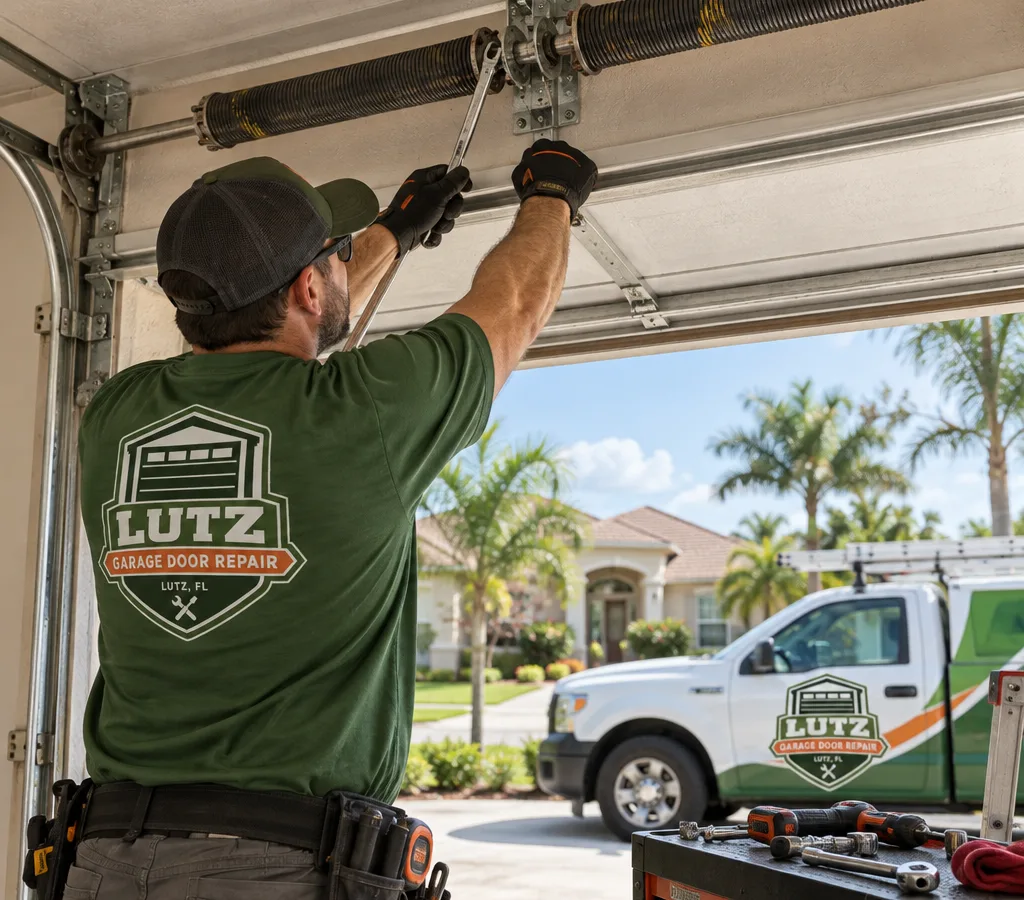
A snapped spring is one of the fastest ways a normal day turns into a stuck car situation. In Lutz, most spring failures show up the same way: the door won't lift more than a few inches, it stops and reverses, or it moves but feels dangerously heavy.
Common signs you may need garage door spring replacement in Lutz:
Springs hold stored energy. If you suspect a break, keep the door closed and avoid trying to force it up with the opener. A door with a broken spring can strain the opener, pull cables off the drums, or come down harder than expected. Lutz Garage Door Repair also handles broader garage door repair in Lutz for doors that are stuck, off track, or not operating safely.
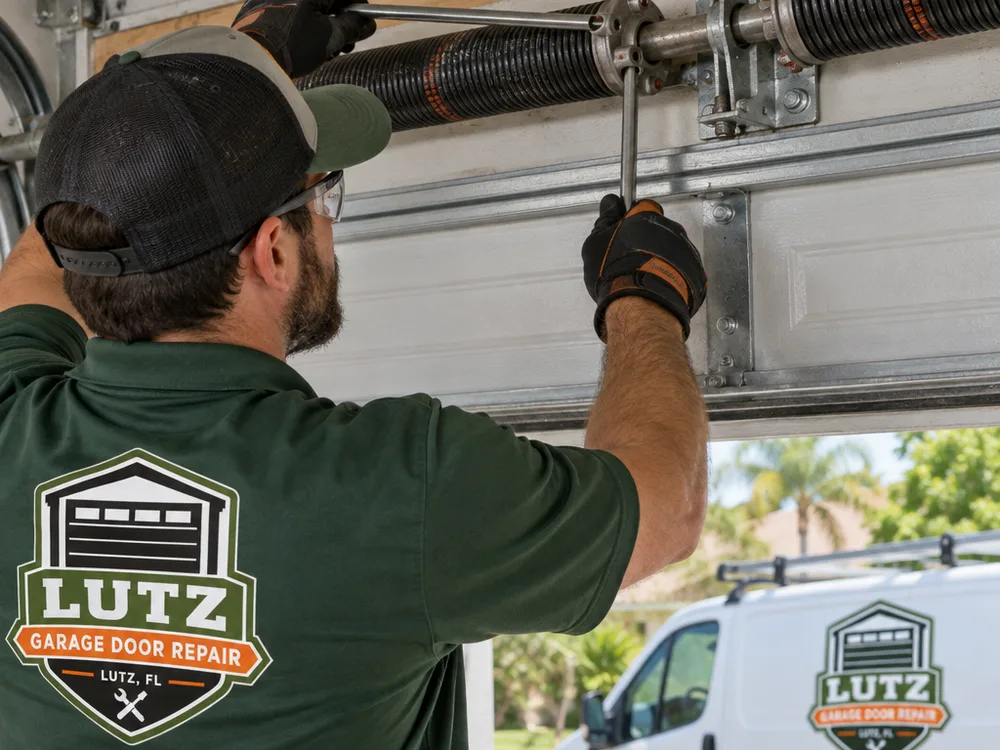
Garage door spring repair in Lutz FL usually means replacing the failed spring set and then tuning the system so the door is properly counterbalanced.
For torsion systems, the most common setup on modern doors, the springs mount on a steel shaft above the door. The correct wire size, inside diameter, and length are selected for your door's weight and height, then the springs are wound to the right number of turns. For extension systems, where springs run along the horizontal tracks, springs and safety cables are matched to the door and adjusted so both sides lift evenly.
After the new springs are installed, balancing is the critical step. A balanced door should stay about halfway open when lifted by hand and should not drift up or slam down. That balance protects your opener, reduces wear on rollers and hinges, and helps prevent cable issues.
If you're not sure what type you have, a quick visual check helps: torsion springs sit above the header; extension springs stretch along the tracks. Either way, spring work is a high-tension repair that's best handled with the right tools and a clear, door-specific spring selection.
Spring size is chosen to match the door's weight and configuration, not guessed from the old part alone. The goal is safe lift and a door that feels neutral by hand.
Spring replacement is paired with a balance test and run cycle to confirm the door tracks straight and the opener isn't doing the heavy lifting.
When a spring breaks, cables can lose tension. We check for fraying, seating on the drums, and even wrap so the door lifts evenly.
We look over common stress points like center bearing plates, end bearings, hinges, and roller stems, then flag anything that could affect safe operation.
You'll know what failed, what needs to be replaced, and what the plan is to get the door back to smooth, predictable movement.
We verify the door is secured, identify the spring system, and check for related issues like loose cables or a shifted drum.
For torsion springs, we match key specs to the door's requirements. For extension springs, we match lift capacity and confirm safety cables are present.
Old springs are removed and new springs are installed using proper clamping and winding procedures so the system stays controlled throughout the job.
We balance the door so it holds position by hand, then run the opener through full cycles to confirm smooth travel and consistent closing.
You get a plain explanation of the repair and what to watch for next, like changes in noise, slower movement, or visible cable slack.
A visible gap in a torsion spring is a clear sign the coil has separated and the door has lost part or all of its counterbalance.
Loose or unseated lift cables can make the door rise unevenly after a spring failure.
Worn bearings, shifted drums, and loose mounting hardware can affect balance and smooth travel.
If your door uses two springs on the same system, replacing both is usually the safer, longer-lasting approach because the remaining spring has the same age and cycle wear. Matched springs keep lift even, reduce strain on the opener, and help the door stay balanced.
It's only safe in limited cases and only with controlled lifting, because the door can be hundreds of pounds without spring assist. Using the opener with a broken spring can burn out the motor or pull the door crooked, so the safest move is to keep the door closed until it's repaired.
The appointment includes balancing and testing. Extra time can be needed if the break caused cable issues or if worn bearings and hardware affect smooth operation.
Springs fail from normal metal fatigue over repeated open-and-close cycles, and they often break when the door is moving because that's when stress is highest. Corrosion can also shorten spring life by increasing friction between coils.
Sometimes, but it's not a like-for-like swap because the hardware layout, lift method, and safety components are different. If you're considering a change in spring type, it needs an on-site assessment of the door, track setup, and mounting points to confirm it can be done safely.
A heavy door can mean the spring is losing tension, the wrong spring was installed previously, or the door balance has drifted due to cable stretch or hardware wear. A balance test and inspection can confirm whether an adjustment is appropriate or whether replacement is the safer fix.
If your door is stuck, heavy, or you can see a broken spring, reach out to Lutz Garage Door Repair for a spring inspection and a clear replacement plan. We'll match the right springs, restore proper balance, and make sure the door runs smoothly before we leave.