
Door re-seated and squared
The door gets guided back into the tracks and checked for level so it does not rack or rub the jamb as it moves.
If your door is crooked, jammed, or the rollers have jumped the rails, get it realigned, the cables checked, and the full travel tested so it runs smoothly again.
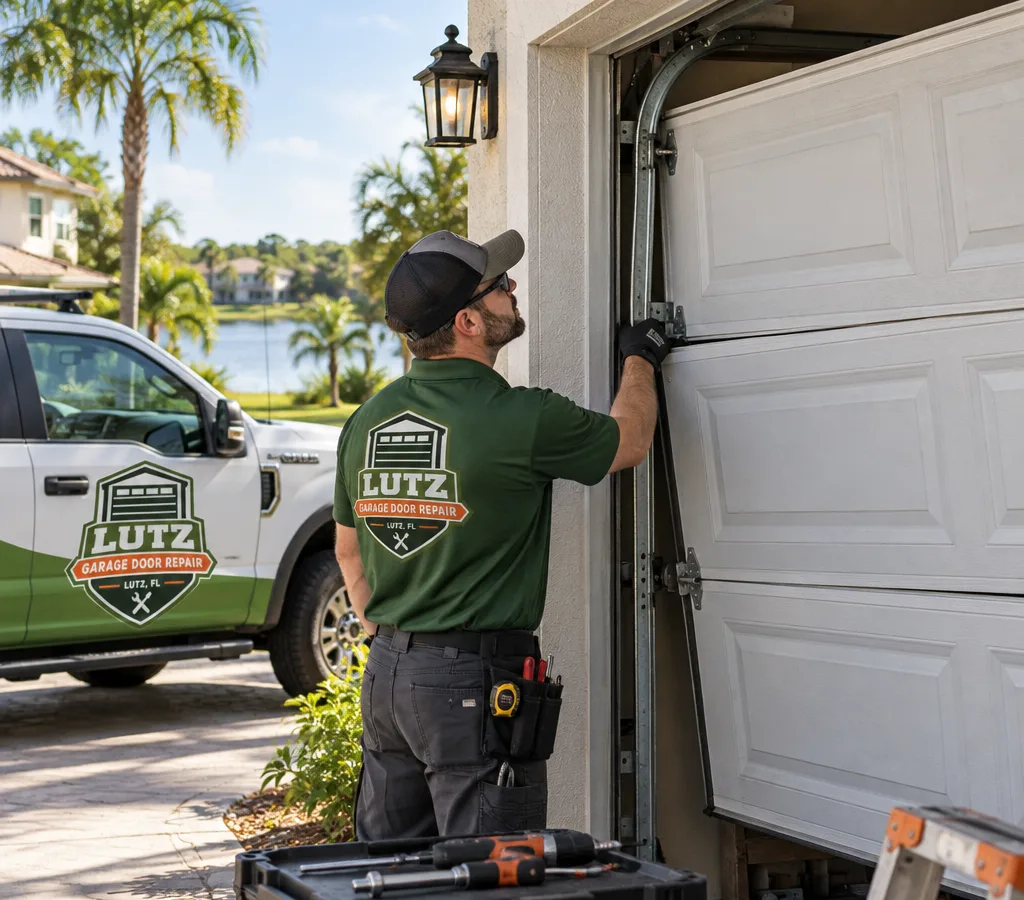
When a garage door comes off track, it usually stops halfway, leans to one side, or binds hard when you try to move it. That is more than an inconvenience. A crooked door can pull on lift cables, bend track, damage rollers, and overload the opener.
This service is focused on garage door off track repair Lutz FL homeowners need when the door will not travel straight. Lutz Garage Door Repair re-seats rollers, squares the door in the opening, corrects track alignment, and checks the cable and drum setup so both sides lift evenly. If the issue started after a bump, a loud bang, or a sudden jam, stop using the door and have it inspected before more parts get damaged.
If you are looking for broader help beyond an off-track situation, garage door repair in Lutz covers other common problems like doors that will not open, noisy operation, and general troubleshooting.
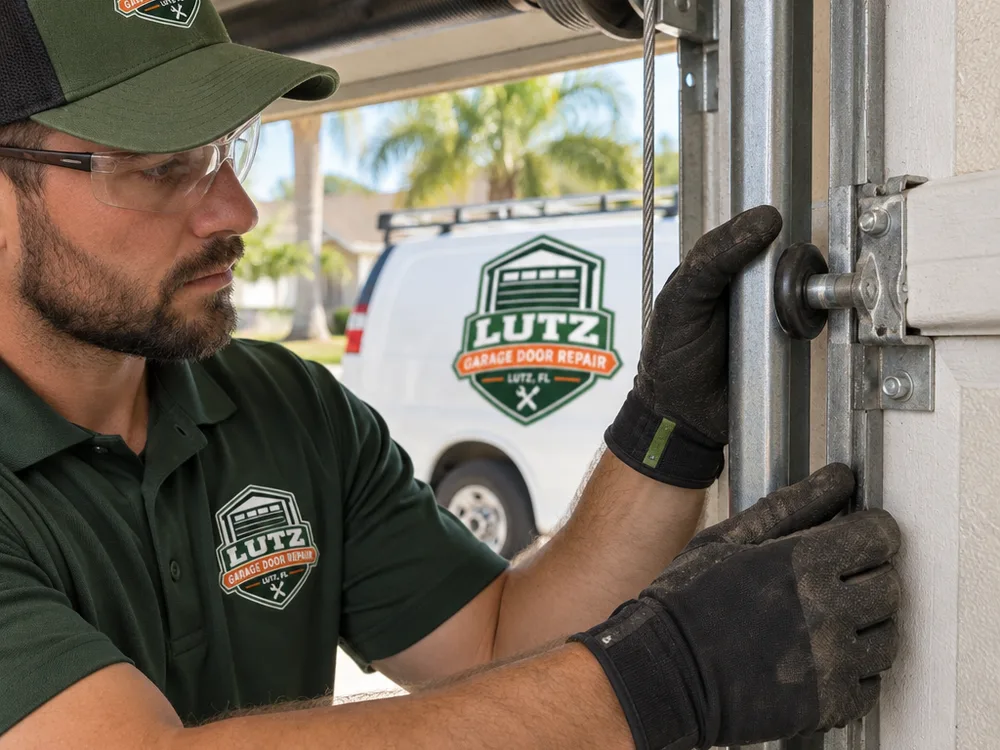
Most off-track calls come down to one of a few mechanical problems:
In Lutz, garage doors see heavy daily use and a lot of humidity. Corrosion on hardware and rollers is common, and it can make rough travel worse when the door is already slightly out of square. The fix is not to force the opener. The fix is to restore correct geometry: track plumb and level, rollers seated and rolling, and cables lifting evenly on the drums.
The door gets guided back into the tracks and checked for level so it does not rack or rub the jamb as it moves.
Track position is corrected at the brackets, and fasteners are checked so the rails stay true through the curve.
Rollers are checked for broken bearings, cracks, or wobble that can make the door climb out again.
If a cable is slack, frayed, or has slipped on the drum, it is corrected so both sides lift evenly and the door stops leaning.
After alignment, the door is tested for smooth manual movement and consistent opener travel without binding or jerking.
You get a plain-language summary of what caused the derailment and what to watch for to prevent a repeat.
The first priority is stabilizing the door so it cannot drop or twist further. If the door is hanging or jammed, it is supported before any adjustments are made.
The tech checks both vertical tracks, the radius sections, and the roller path for bends or pinch points, then inspects rollers, hinges, and lift cables for damage caused by the derailment.
Rollers are guided back into the track and the rails are adjusted at the brackets so the door runs centered, with proper spacing and no scraping.
If one side is slack, the cable is reset on the drum and tension is evened out so the door lifts straight. Frayed cables are addressed because they can fail under load.
The door is run through open and close cycles to confirm it stays seated in the track, does not bind at the curve, and moves smoothly from floor to header.
If your garage door is off track, the safest move is to stop using it until it is inspected. Trying to force the opener can pull the door further out of square, strip the opener gear, or snap a cable.
A few practical steps that help before service arrives:
Lutz Garage Door Repair can walk you through what to look for when you reach out, like whether the rollers are outside the track, whether one cable is slack, and whether the track is visibly bent. That information helps set expectations for the repair approach when the technician arrives.
You can sometimes guide a roller back into the track, but it is risky when the door is crooked or a cable is slack because the door can shift suddenly and get worse. A proper repair includes checking track alignment at the brackets, inspecting rollers and hinges for damage, and confirming both lift cables are seated and tensioned correctly on the drums.
Often it is related, because a slipped or frayed cable can make one side lift faster and rack the door until rollers pop out. That said, many off-track issues start with a bumped track, loose bracket hardware, or worn rollers that bind in the curved track section. The right fix depends on what failed first.
Common signs are a door that rises unevenly, one side that looks lower, a visible slack cable, or a cable that looks frayed near the bottom bracket or the drum. If you see any strand separation, treat it as urgent because cables are under high tension and can fail during operation.
Yes, it can. When the door binds, the opener may keep pushing and can strip internal gears, bend the rail, or throw the trolley out of alignment. It is best to stop operation and have the door realigned so the opener is not fighting the door's weight.
The work covers re-seating rollers and aligning track. If the track is bent, rollers are broken, or cable work is needed to correct a racked door, it can take longer because the door must be re-squared and tested through multiple cycles.
The most common replacements are damaged rollers, bent track sections, and worn lift cables. Which parts matter depends on what got stressed when the door derailed, so the technician will verify the roller stems, hinge barrels, track shape, and cable condition before recommending parts.
Tell Lutz Garage Door Repair what the door is doing (crooked, stuck, rollers out, cable slack) and you will get a clear plan to realign the track, correct cable issues, and test the door for reliable travel.